
sol2070@velhaestante.com.br reviewed A World Appears by Michael Pollan
Difficult topic made acessible
4 stars
( em português: sol2070.in/2026/05/a-world-appears-michael-pollan/ )
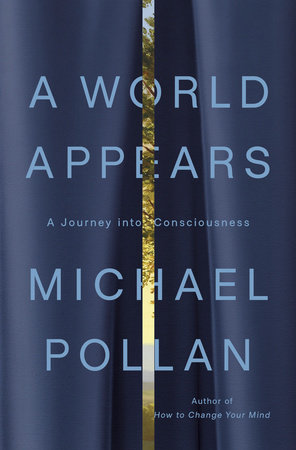
Considering whether I should read the latest book by the acclaimed journalist Michael Pollan, A World Appears (2026, 320 pp.), I remembered his previous investigation and had no doubts.
His preceding book, How to Change Your Mind (2018), was the most captivating book on psychedelics I have ever read, even after having already gone through a mini-library on the subject.
A World Appears, meanwhile, is about the nature of consciousness, another topic I pursued obsessively for some time. It did not have quite the same impact as the previous one, but it ranks among the most interesting books on the subject, thanks to its engaging and accessible narrative, the skeptical and penetrating curiosity that made Pollan famous—consistently placing him among the bestselling and most discussed authors—and also a certain psychedelic bent.
Perhaps its greatest merit is bringing this major philosophical …
( em português: sol2070.in/2026/05/a-world-appears-michael-pollan/ )
Considering whether I should read the latest book by the acclaimed journalist Michael Pollan, A World Appears (2026, 320 pp.), I remembered his previous investigation and had no doubts.
His preceding book, How to Change Your Mind (2018), was the most captivating book on psychedelics I have ever read, even after having already gone through a mini-library on the subject.
A World Appears, meanwhile, is about the nature of consciousness, another topic I pursued obsessively for some time. It did not have quite the same impact as the previous one, but it ranks among the most interesting books on the subject, thanks to its engaging and accessible narrative, the skeptical and penetrating curiosity that made Pollan famous—consistently placing him among the bestselling and most discussed authors—and also a certain psychedelic bent.
Perhaps its greatest merit is bringing this major philosophical and scientific question to a much broader audience in a highly understandable way (which is no small feat, given the complexity involved), concerning something central to human life—or to that of any other being, since sentience, probably inseparable from life, is consciousness’s younger sibling.
What is consciousness? Although it makes all perception, thought, and emotion possible, there is no meaningful consensus—philosophically, much less scientifically—since it has never been detected or isolated. So much so that one proposed way of solving the problem is to deny it altogether: consciousness does not exist, only the illusion of subjectivity (though one might point out the contradiction in that idea, since to experience an illusion, subjectivity is required).
How can we know so little (in any consensual sense), almost nothing, about that which makes nearly everything we do possible?
Even though the question cries out to be investigated, it is difficult even to hear it. Simply recognizing that there is something profoundly mysterious at the center of existence already requires an uncommon kind of attention—an introspective and analytical capacity. It is common not even to feel that there is an important question here, or that anything remains unexplained.
Among those devoted to studying it, the most frequently cited definition of consciousness is that of the philosopher Thomas Nagel: an organism is conscious if there is something that it is like to be that organism. I am conscious because there is something here that it is like to be the one writing this.
The fact that the most common definition is neither simple nor precise illustrates how elusive the matter is. A simpler approach would be to equate consciousness with subjectivity: if there is subjective experience, there is consciousness (which is why computers are not conscious, since there is no one “in there”). Nagel chose his phrasing to emphasize that this “something” differs entirely across organisms; we have no way of knowing what it is like to be a bat, in his most famous example.
This subjectivity evokes a kind of being, a central entity that feels, perceives, and thinks. Yet this center of experience has never been detected in the brain or body.
The color red, for example, does not exist “out there,” only mentally. There is an electromagnetic spectrum that the eyes convert into electrochemical signals, which then reach the visual cortex. Then, there is the subjective experience of redness. One of the great questions is how and why this emerges as subjective experience rather than as a signal processed by a machine, where there is no one inside—no subjectivity.
A few centuries ago, it was believed that non-human animals were biological machines that felt nothing, with no one inside (some still believe this today). They were thought to be mere automatons. Why are we not automatons, but instead beings with a subjective experience of things?
To ask what this subjectivity is is the same as asking what consciousness is.
Pollan spent four years studying and interviewing specialists, each with their own preferred theory. There are at least twenty-two theories, but only the three or four he considers most promising are explored in depth. He warns at the outset that there will be no grand conclusive answer, but simply asking the question and recognizing that we do not know already begins to illuminate something.
I especially enjoyed the beginning, where plant sentience is explored. Sentience is basically the capacity to perceive the world subjectively, as an early stage of consciousness. It does not necessarily include this notion of selfhood, of a central entity, or self-awareness. But why shouldn’t plants be capable of sensing things in this way?
The psychedelic angle appears because one of the standard, well-documented effects of psychedelic experiences is a shift in worldview. The two most common transformations involve coming to believe that: plants have sentience or even consciousness, and that matter is not the fundamental level of perceived reality. Pollan himself began to consider plant sentience after a psychedelic experience.
Moreover, most of the specialists interviewed are familiar with psychedelics. As the cognitive scientist Christof Koch jokes in the book, this has practically become mandatory in the field.
What somewhat diminished my opinion of the book were the approaches that felt tedious, seeming only marginally fruitful. For example, the section on an independent researcher collecting random descriptions of moments of consciousness, or the section on streams of consciousness in literature (though this is interesting from a literary standpoint). It does not compromise the work, of course—after all, Pollan did the work of investigating less obvious paths. Still, it was disappointing that he did not delve more deeply into alternative approaches such as idealism (although Bernardo Kastrup and his contemporary perspective are mentioned) and panpsychism.
Despite the inevitable inconclusiveness, there is indeed a beautiful ending—one far more practical. Pollan has practiced meditation for decades, and while trying to interview the Zen teacher Joan Halifax, he ended up on a retreat in a cave to which she had sent him, so that he might examine the question more directly and with less conceptualization. Then he experiences the opening that makes all the difference.